Outline
1. Market Overview
2. Leading Supermarket Groups by Country
3. 畅销品类和消费趋势
4. Regional Coverage and Market Share Overview
5. Special Focus: E.Leclerc Case Study
6. Strategic Opportunities & Risk Analysis
7. Conclusion
8. 数据与来源
1. 市场概况
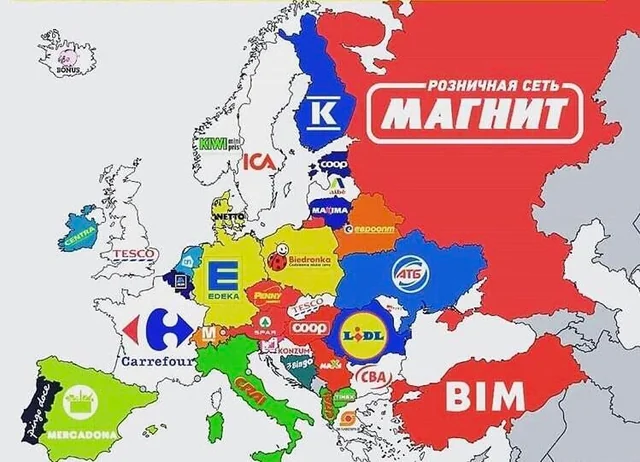
欧洲是全球最先进、最复杂的零售市场之一。超市行业具有三大特点:业态多样化、规模经济和区域集中度。
核心国家——法国、德国、英国、意大利和西班牙——汇聚了全球一些最具影响力的超市集团,包括家乐福、奥乐齐和乐购。零售业态种类繁多,从大型超市、超市到折扣店、便利店和现购自运批发商,应有尽有。这种业态的多样性反映了欧洲消费者生活方式的碎片化和社会经济的多样性。
The market structure reveals a dual dominance: local champions drive volume, while international giants ensure innovation and competition. French brands like Carrefour and E.Leclerc dominate locally, while German discounters Aldi and Lidl continue sweeping across Europe. Tesco leads in English-speaking markets, and regional champions like Spain’s Mercadona or Italy’s Coop retain loyalty through localization.
2. 各国家主要超市集团

France: Multi-Format Pioneer
Carrefour
· Market share: 21.6% (2024)
· Strengths: Broad format strategy, AI-driven customer engagement
· Key Strategies:
o Segmented store types (Hypermarkets, City stores, Proxi)
o Cold-chain optimization lowered perishables waste to 3.2%
o “Carrefour Pulse” AI recommendation system increased loyalty repurchase to 65%
· Challenges: Price war with E.Leclerc, rising discount pressure from Lidl
E.Leclerc
· Market leader with 24.4% share (2024)
· Cooperative model (2000+ independent stores under ACDLec umbrella)
· Own-brand sales account for 40%—led by Marque Repère and organic line Bio Repère
· Drive-through online/offline hybrid dominates 46% of France’s e-grocery market
· Sustainability: Targeting 100% renewable energy use in stores by 2025
Les Mousquetaires (Intermarché, Netto)
· Market share: 17.5%
· Strong local supply (60% goods sourced in France), launched “Zero-Kilometer” produce zones in 2024
· Netto continues to expand discount stores with minimal SKU strategy
Germany: Discounters Redefining Efficiency
Aldi (Nord & Süd)
· Market share: ~40% in discount segment
· Product range: ~1,500 SKUs vs traditional 15,000+
· Over 90% private label penetration
· Launched “Aldi Go” cashierless stores in 2024 with computer vision tech
Lidl (Schwarz Group)
· Market share: Second-largest discounter
· Expanding fastest in Spain, known for aggressive pricing and in-house production
· New line “Lidl Bio” focuses on affordable organic products
· Targeting 100% recyclable packaging by 2025
Metro (Cash & Carry)
· Focus on B2B and hospitality clients, especially in Eastern and Southern Europe
· Online orders rose 35% in 2024 via Metro Pro platform
United Kingdom: Omnichannel Innovation
Tesco
· Market share: Over 25% (2024)
· Physical presence: Extra hyperstores + 2,000+ Express convenience outlets
· Online: “Whoosh” 30-minute delivery service across 1,000+ stores
· Clubcard 数据助力 AI 个性化;回头客率达到 79%
· Facing aggressive pricing pressure from Aldi and Lidl, which led to selective price cuts (5% on essentials)

Spain: Local Giant Leads
Mercadona
· Market share: 26.2%
· Operates over 1,600 stores nationwide
· Own brand Hacendado drives 60% of sales
· Invested in 22 customer co-creation innovation centers
· 60% of products sourced from in-house factories
Italy: Localized Competition
Coop Italia
· Market share: 18.5%
· Strong community ties; reinvests 10% of profits in local projects
· New “Made in Italy” premium line launched in 2024
· Solar-powered stores cut emissions by 15%
Conad
· Market share: 15.2%
· Federation of 54 regional cooperatives
· Rapid growth via acquisition of Auchan Italy
Esselunga
· Market share: 12.1% (premium supermarket)
· Strong foodservice offer and loyalty program
· Trialing AR makeup mirrors in beauty section
3. Best-Selling Categories & Consumer Trends
Best-Selling Categories
· Fresh Produce: Fruit, vegetables, meat (bananas, apples, oranges—mostly imported)
· Bakery & Snacks: Increasing demand for imported nuts (hazelnuts, walnuts)
· Daily Necessities & Personal Care: Chinese-origin detergents and herbal shampoos are valued for efficacy and affordability
· Home & Small Appliances: Smart gadgets like robot vacuums and air fryers see high sales in Germany and France
· Fragrances: Jasmine and osmanthus reed diffusers, niche Chinese perfumes gain traction
Consumer Trends
· Discountization: Accelerated by inflation, discount formats thrive
· Localization: Local-sourced goods favored (e.g., Sogidis in France, regional foods in Italy)
· Sustainability: Consumers accept 10–20% premium for eco-friendly packaging or organic products
· Omnichannel Shopping: Click & collect, drive-through pickup, and rapid delivery are now standard
[Suggested Image: Trend infographic – discount, local, green, digital]
4. Regional Coverage & Market Share Overview
| Country | Leading Retailer | 2024 Market Share | Competitive Edge |
| France | E.Leclerc | 24.4% | Co-op model, strong private label |
| France | Carrefour | 21.6% | Multi-format, tech-driven loyalty |
| Germany | Aldi | ~40% (Discounters) | Efficient supply chain, private label |
| UK | Tesco | 25%+ | Omnichannel leader, fresh produce strength |
| Spain | Mercadona | 26.2% | In-house production, local focus |
| Italy | Coop | 18.5% | Community investment, premium local goods |
5. Special Focus: E.Leclerc Case Study
Founded in 1960, E.Leclerc is France’s largest supermarket brand by market share. It operates under a cooperative model uniting 2,000+ independent retailers across France and neighboring countries.
Private Label Leadership
· Marque Repère spans all categories
· Bio Repère certified organic by France’s AB label
· Prices ~30% lower than national brands
Supply Chain and Marketing
· Own factories and joint purchasing reduce cost volatility
· Distribution centers enable same-day restocking
· Over 50% of online Drive sales come from private labels
Sustainability & Innovation
· Fresh food section remodeled with prepared foods zone
· All stores targeting renewable energy use by 2025
· Customer-led innovation: reusable packaging pilot from user feedback

6. Strategic Opportunities & Risk Analysis
Collaboration Opportunities
· Fresh Goods: Nuts and tropical fruits through Metro and Carrefour for foodservice and hypermarket segments
· Daily Goods: Natural hygiene products via E.Leclerc’s dermo-cosmetics area
· Home & Appliances: Health-focused gadgets through Tesco or Carrefour
Channel Strategy by Retailer Type
· International Chains: (e.g., Carrefour, Metro) ideal for scalable operations
· Regional Brands: (e.g., Coop, Mercadona) require local sourcing and community fit
· Discounters: (e.g., Aldi, Lidl) best for value-priced, high-demand SKUs
Risk Alerts
· Regulatory Compliance: Strict EU packaging and labeling norms
· Local Brand Loyalty: High in markets like Spain and Italy where local production dominates
7. Conclusion
The European supermarket industry in 2025 is a landscape of contrasts: global scale vs. local intimacy, tech-driven convenience vs. traditional loyalty. Despite economic headwinds, the region continues to innovate through discount expansion, sustainability pledges, and omnichannel growth.
For brands seeking entry or expansion, the keys are clear: offer differentiated value, tailor to regional demands, and embed into digital ecosystems. The market is open—but only to those prepared.
8. Data & Sources
· Carrefour, E.Leclerc, Tesco, Aldi, Lidl official investor reports (2024)
· NielsenIQ Europe Retail Tracker (2024 Q4)
· EuroCommerce Annual Review
· RetailDetail.eu, Lebensmittel Zeitung, LSA Commerce & Consommation
· Mintel, Statista retail dashboards
· In-market supplier interviews (France, Germany, Italy, Spain) conducted between Jan–June 2025